ATAS provides a complete ecosystem for working with options data. Each tool solves a different analytical task depending on your timeframe, focus and market workflow.
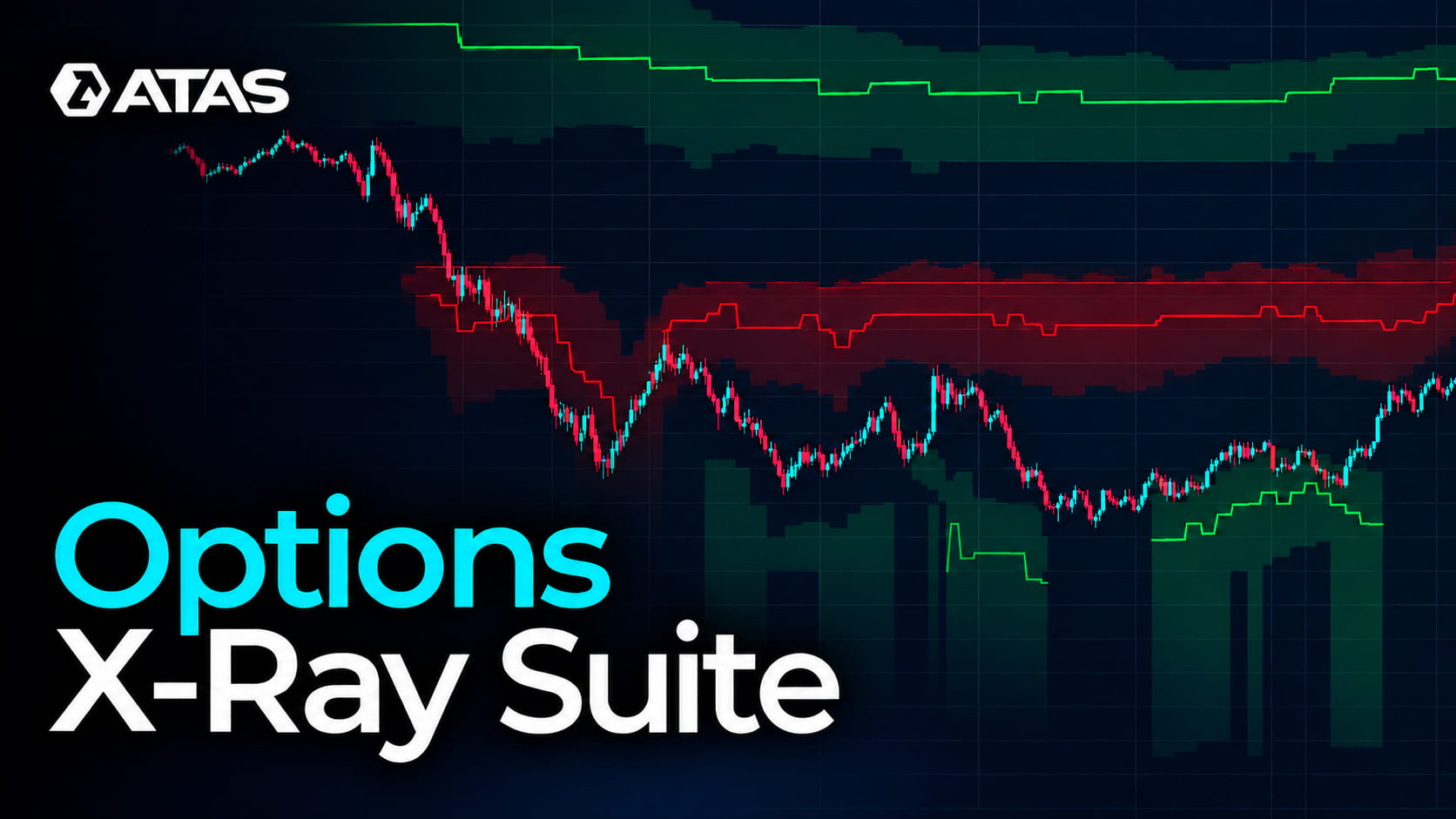
Options X-Ray Suite consists of ten advanced indicators based on the one-minute CBOE feed. They let you analyse SPX directly on an ES chart and show how dealer hedging is changing the futures chart right now, where walls are forming and which participant group — market makers, retail traders, brokers and others — is applying pressure.
Available only with Ultra. One-minute CBOE data is included in the subscription.
Options Chain Suite consists of four EOD indicators based on the daily Open Interest snapshot for analysing options on ES, NQ, CL and GC directly on the chart. In practice, you can analyse any asset for which the provider supplies options data.
Available with Pro and Ultra. A Rithmic or Interactive Brokers connection is required.
Options Board and Options Strategy Analyzer (Beta) provide a strike-and-expiration matrix for evaluating quotes, Greeks and implied-volatility skews, plus a module for modelling PnL charts and assessing risk/reward potential. They work with the same ES, NQ, CL, GC and other supported instruments.
Available only with Ultra. A Rithmic or Interactive Brokers connection is required.